.png)

Where Does Your Beef Come From | Step by Step

Where does your beef actually come from?
Not the store. Not the butcher counter. Not the label on the package.
Where was the animal born? How was it raised? What did it eat? And how many hands did it pass through before it reached your table?
Most of us assume we know. If the label says "Product of USA," it sounds straightforward enough. We should be able to trust that, right?
But that phrase doesn't always mean the animal was born and raised here. In many cases, it simply means the beef was processed in the United States.
That difference matters.
So let's walk through it step by step.

Beef doesn't start in a cooler or a meat case. It starts on the ground.
It starts with calving season.
On our ranch in Northeastern Colorado, spring means long days and early mornings. Cows are watched closely as they begin to calve. Weather can shift quickly this time of year. Warm afternoons can turn into cold, wet nights, sometimes with snow blowing in sideways.
And when the weather turns, we adjust.
There are stretches when we check cows every hour for days at a time. Especially during cold snaps or storms. Calves can struggle in harsh weather, and being present makes a difference. That means alarms set through the night. Flashlights in the dark. Boots back on before the last pair has even dried.
When a calf is born, the first hour is important. We watch to make sure it stands, nurses, and bonds with its mother. That first drink of colostrum sets the foundation for its immune system. A strong start makes a difference months down the road.
Calving season isn't glamorous. It's mud on your boots. It's checking cows before sunrise. It's walking pastures to make sure every pair is accounted for. It's keeping records, tagging calves, and making sure each one is off to a healthy start.
Calves spend their first months nursing and gradually learning to graze alongside the herd. Good pasture management matters. Clean water matters. Low stress handling matters.
None of that shows up on a grocery store label.
But it directly impacts the health of the animal and, ultimately, the quality of the beef.
Where your beef comes from doesn't begin at processing. It begins in a pasture, during calving season, with careful attention from day one.
Raising and Feeding
After calves are weaned, they continue growing in a herd environment. This stage lasts much longer than most people realize. Beef production isn't a quick process. It takes time for an animal to mature properly.
For most of their lives, our cattle are grass fed. They graze on pasture, building muscle slowly and naturally. Good pasture management matters here. Rotating pastures, monitoring forage quality, and maintaining clean water all contribute to steady, healthy growth.
As cattle mature, they enter a finishing phase. On our ranch, we finish our cattle on grain. That finishing period helps develop the marbling most families expect when they cook a steak. It influences tenderness, consistency, and flavor.
You may have seen videos online comparing grass fed and grain finished beef and noticed a difference in fat color.
Grass fed beef typically has a more yellow tinted fat. That yellow color comes from beta carotene found in grass. Grain finished beef tends to have whiter fat because grain based diets contain less beta carotene.
Neither color automatically means better or worse. It simply reflects what the animal was eating.
However, finishing on grain often produces more consistent marbling, which contributes to the tenderness and flavor many families are used to. That's one reason we choose a grass fed, grain finished program.
Understanding what an animal was fed helps you understand what you're tasting. And that detail isn't always obvious from a label alone.
Beef quality doesn't suddenly appear at processing. It develops over time through nutrition, management, and deliberate decisions made long before harvest day.
What Do Beef Labels Actually Mean
Once beef reaches the store, most of what consumers see is the label. And labels an feel reassuring.
"Product of USA."
"Grass Fed."
"Natural."
"No Hormones Added."
But what do those phrases actually mean?
Let's start with one of the most common.
Product of USA does not always mean the animal was born, raised, and harvested in the United States. In some cases, it can mean the beef was simply processed here. An animal may have been born and raised elsewhere, imported, and then processed in the U.S. and legally labeled as a U.S. product.
That surprises a lot of people.
The label isn't necessarily false. It just doesn't always tell the whole story.
The same goes for other common terms.
Grass Fed can mean the animal ate grass for most or all of its life, but unless it carries a specific certification, the details can vary from one producer to another.
Natural generally means minimally processed and without artificial ingredients after harvest. It doesn't necessarily describe how the animal was raised.
No Hormones Added is another phrase that can cause confusion. Federal regulations already prohibit the use of added hormones in pork and poultry. In beef, programs vary, but the phrase alone doesn't always provide full context.
None of this means labels are useless. It simply means they are limited.
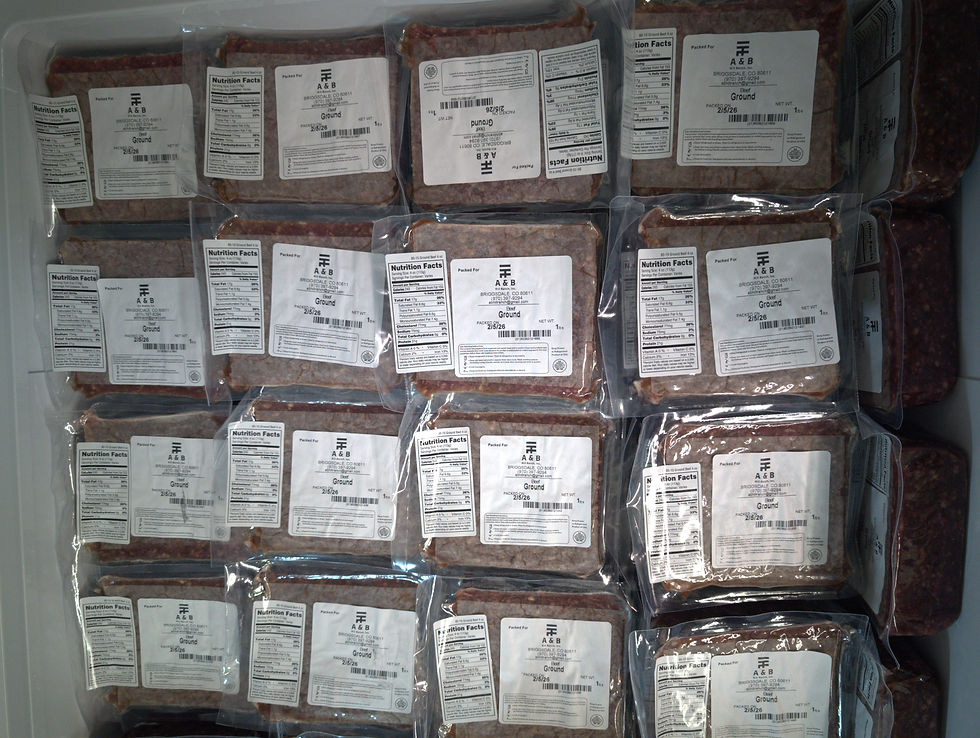
That's one of the differences when you buy beef from a ranch instead of a supply chain. You're not relying on marketing language. You're having a conversation.
What Happens at Processing
When cattle reach the appropriate size and finish, they are transported to a processor. This is the stage most people picture when they think about "where beef comes from," but it's only one part of a much longer process.
At the processor, cattle are handled under inspection. Depending on the facility, that may be state or federally inspected, but either way it ensures food safety standards are met.
After harvest, the beef is typically aged. Aging allows natural enzymes within the muscle to break down tissue, which improves tenderness and flavor. This step takes time. It cannot be rushed without affecting quality.
Once aging is complete, the carcass is broken down into individual cuts. Steaks, roasts, ground beef, and specialty cuts are carefully trimmed, portioned, and packaged. When you buy bulk beef, this is where your cut sheet decisions come into play. Thickness of steaks, size of roasts, how much is ground, all of that is determined before packaging.
Finally, the beef is frozen and boxed, ready for pickup and your freezer.
This stage is important. But it doesn't create quality on its own. It preserves and prepares what has already been built over months of careful management.
From Processor to Your Freezer
After packaging, beef may travel through distributors, warehouses, and retail chains before reaching a grocery store shelf. That's the standard supply chain.
When you buy directly from a ranch, that chain is shorter.
You know who raised the animal.
You know how it was fed.
You know where it was processed.
And if you have a question, you know who to ask.
Direct to consumer beef removes layers. It replaces assumptions with conversations.
You're not relying solely on a label to tell you a story. You're hearing it from the people involved from the beginning.
So where does your beef come from?
It begins in a pasture during calving season. It grows over months of careful feeding and management. It passes through processing under inspection. And eventually, it reaches your freezer.
But the difference isn't just geography. It's transparency.
We're a fifth generation ranch. That means we don't just think about this season. We think about the next one. And the one after that. The way cattle are raised today affects the land tomorrow and the families who depend on it.
When you buy beef from our ranch, you're not guessing what happened before it reached your table.
You know.
If you have question about how our cattle are raised, finished, or processed, we're always happy to answer them. Transparency shouldn't be complicated.
If filling your freezer this season is something you're considering reach out. We'll walk you through it.


Comments